A Crisis of Faith
My grandmother, Mildred Reynolds, was a devout Christian. She regularly prayed and read her Bible. She never missed church—Sunday morning, Sunday night, and Wednesdays too. She raised her kids to trust in God and expected the rest of us to do the same. And she wasn’t hesitant to speak her mind when she thought you were doing something wrong. My dad used to say that growing up, he never heard her say a single cuss word.
In our faith tradition, that kind of faithfulness meant something. It meant that when hard times came, you prayed. You believed. You trusted God to heal and deliver. And when my grandmother was diagnosed with Alzheimer’s, that’s exactly what we did. We prayed. But she didn’t get better. She got worse. Eventually, it got so bad that she was moved into a nursing home with round-the-clock care. Over time, the disease changed her personality. She grew sad and angry, sometimes cussing at the nurses. It was like watching the person we loved slip away a little more every day. I remember visiting her near the end. She pulled me close and whispered in my ear something I’ll never forget. She asked me to kill her.
There’s no way to sugarcoat it. My grandmother’s life had become a living hell. And to me it sometimes felt like a cruel joke—that someone so good, so faithful, could suffer so deeply. Why would God let this happen to her? Why didn’t He answer our prayers to relieve her anguish? Why does a woman who served God her whole life have to end it like that?
As I wrestled with these questions, it led me to a crisis of faith. The belief system that had carried me for years couldn’t answer my questions—I just couldn’t keep believing in the same way, which gave me two options: either walk away from faith altogether, or wrestle with God until I found a different way to believe. And that’s what I did. I yelled at God. Cried out to God. Begged God. Questioned if God was even real.
That wrestling match lasted for a long time. But I stayed in it. I didn’t walk away. I stayed in the struggle. And somewhere in the midst of that long, painful, honest fight, something began to change. And what emerged was a new kind of faith—more honest and humble, more surrendered and open to mystery, and more deeply rooted in the love and goodness of God.
This new faith didn’t come easily, but it has sustained me ever since and helped me make sense of other painful experiences too. And it didn’t just change what I believed—it changed me as a person. Although hard-won, this new faith has become one of the greatest blessings of my life.
Have you ever wrestled with doubt like this? There are moments in everyone’s life when faith doesn’t feel like calm assurance, but more like a wrestling match with God.
Jacob’s Struggle with God
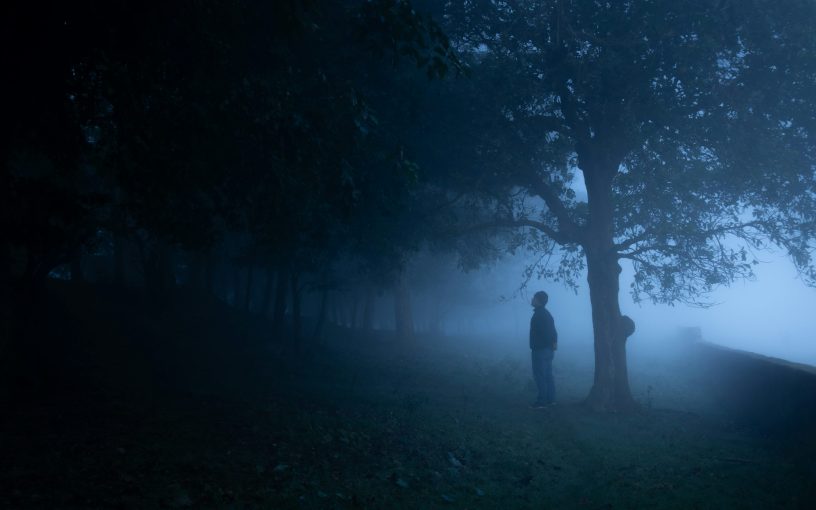
In Genesis 32:22-21, we find Jacob alone in the dark, on the edge of a life-changing confrontation with his brother Esau, whom he had betrayed years earlier. And on that night, Jacob finds himself physically wrestling with a mysterious figure—later revealed to be God. This is a strange, beautiful, and profoundly human story. Because who among us hasn’t wrestled with God in the dark? Who hasn’t wrestled to make sense out of fear, pain, grief, or uncertainty?
What strikes me most about this story is that Jacob isn’t condemned for wrestling. Quite the opposite: he’s blessed and transformed. This transformation is marked by God giving him a new name. Jacob, whose name meant “supplanter”—someone who manipulates and deceives others to gain advantage—is renamed Israel, meaning “one who wrestles with God” and overcomes. This change in name signals nothing less than a profound spiritual transformation. But it only came through struggle, and Jacob didn’t emerge unscathed—he walked away with a limp. This story reminds us that our faith matures, blesses, and transforms us only when we honestly and persistently wrestle with our doubts and fears. Wrestling with God, then, isn’t a sign of weak faith but the pathway to a stronger faith.
Doubt Isn’t the Enemy
If this lesson is true, then we must say that doubt is not sinful. But despite this conclusion derived from the story of Jacob, some churches still demonize doubt. They describe faith as unwavering belief in a set of doctrines, and if you doubt these teachings, then you are effectively doubting God’s truth, which is sinful. This creates an environment where people feel ashamed or fearful about honestly confronting their questions, causing them to hide their doubts instead of courageously wrestling with them.
To the contrary, 20th-century theologian Paul Tillich argues that doubt isn’t sinful, it’s not the opposite of faith—rather, doubt is an integral part of faith because faith can’t grow without it.1 Doubt raises questions that move us beyond blind assent to religious authority or pollyannish Christian clichés, pushing us toward something more thoughtful, more honest, more mature. In this view, doubt isn’t something to fear; it’s something to welcome. Why? Because real faith isn’t about having all the answers. It’s about having the courage to trust God in the face of uncertainty.2 If we had absolute certainty, we wouldn’t need faith—we’d have proof. But as Hebrews reminds us, “ . . . faith is confidence in what we hope for and assurance about what we do not see.”3 Faith involves risk. It invites questions. And it requires the kind of trust that can only be formed through wrestling.
All of this helps us to see that when Jacob wrestles in the dark, it’s not just one man’s struggle with God—it’s a metaphor for faith itself, and how faith can be hard, messy, and exhausting. Nevertheless, this kind of faith is real. It’s honest and authentic, and God honors it.
The Sin of Certainty
While Paul Tillich helps us see that doubt is not a sin, contemporary writer Peter Enns shows how our obsession with absolute certainty is sinful, at least when it comes to faith.4 In our quest for certainty, Christians can easily mistake trust in God for trust in a particular set of beliefs about God. But again, faith, rightly understood, isn’t about having all the religious answers. It’s about trusting God in the face of uncertainty. And this kind of relationship with God is rarely as neat or tidy as we might prefer.
Peter Enns explains that our obsession with certainty can lead us to build rigid belief systems that we cling to at all costs. When those systems are challenged—by science, suffering, or life experience—we often react with fear and defensiveness. In doing so, we begin to confuse our beliefs about God with God Himself. We end up worshiping our beliefs instead of worshiping God. Our doctrines become idols—substitutes for a living relationship with our Heavenly Father. And those idols can lead us into pride, judgment, exclusion, and even hatred. Ironically, in our attempt to be faithful, we can lose sight of the very God we claim to follow.
The remedy is to loosen our grip on the need for absolute certainty and trust God more than our ideas about God. When we demand that everything fit neatly into our theological boxes, we shrink God down to something manageable and explainable. But the God revealed in Scripture is not a formula to master or a doctrine to be defended. God is a mystery to be trusted. Faith invites us to surrender our need for control and to follow, even when the path is unclear.
And it’s important to recognize that if we refuse to loosen our grip, it doesn’t just hurt us—it hurts the church. The fear of doubt and the demand for certainty create communities where people are afraid to tell the truth, where honesty feels risky and shame silences questions. In that kind of culture, doubts are whispered in coffee shops instead of discussed in sanctuaries. Difficult questions are debated at the pub but never spoken aloud in our small groups. Churches become places where people feel pressured to pretend that they have all the answers—and when that happens, real growth becomes impossible.
This is tragic, because faith is supposed to be dynamic. It’s a trust in God that’s intended to stretch, grow, deepen, and mature over time. And one of the main ways it does this is through wrestling with doubt, not doubt that paralyzes us in fear, but doubt that presses in, engages, seeks, and struggles. This is abundantly clear in Paul’s letter to the Ephesians, where he writes that God wants us to mature—so that we’re no longer “tossed back and forth by the waves and blown here and there by every wind of teaching and by the cunning and craftiness of people in their deceitful scheming.”5 In other words, God wants us to grow.
And part of growing is moving beyond a literal, rule-based faith—the kind of faith that clings to certainty like a child—to an adult faith that appreciates the power of symbol and embraces God as the mystery of the world. But this kind of maturity doesn’t happen by accident. It requires wrestling with God. And God gives us plenty of opportunities to do just that—especially as we grow older, as new questions emerge, and as the simple answers we once relied on begin to unravel before our eyes.
Some people get stuck in this spiritual crisis by either clinging to a childish faith that can’t handle the complexities of adult life or by walking away from religion altogether. But others meet the challenge. They lean in. They begin to wrestle with their faith—and in the process, they discover that God is bigger than they ever imagined. They become more humble, more generous, more open-minded and compassionate. They develop a mature faith that empowers them to live with integrity in the tension between what was, and the new thing that God is doing in our hearts and minds today.6 It empowers them to trust God even when they don’t understand why things are unfolding the way they are. And it empowers them to keep wrestling with God until they find a deeper kind of blessing.
The Blessing in the Wrestling
In the story of Jacob, he refused to let go of God in the wrestling match until God blessed him. And the blessing came—but not in the way he expected. He walked away with a limp and a new name. He is no longer Jacob, the deceiver. He is Israel, the one who wrestles with God. The good news this morning is that we are all invited to be Israel. To be those who wrestle with God. God does not condemn your doubts. God welcomes your questions. Like a loving parent, God gives you space to struggle. Because the struggle leads to growth. The wrestling leads to blessing.
You have permission to doubt, permission to ask hard questions, permission to let go of simplistic answers, permission to be honest with God and each other, and permission to tell pastors who demand blind faith to take a hike. You are invited to risk faith by sharing your doubts with a trusted friend or working through a hard question in your small group. You are encouraged to meditate on Scripture, read honest books, and listen to podcasts that ask good questions. Because God is not afraid of your doubts. God meets you in the wrestling. And when you refuse to let go—when you hold on to God through the struggle—you may just find yourself walking away not just limping but transformed.
Endnotes
- Paul Tillich, Dynamics of Faith (New York: Harper & Row, 1957).
- For the importance of courage in the Christian life, see Paul Tillich, The Courage to Be (New Haven: Yale University Press, 1952)
- Hebrews 11:1, New International Version.
- Peter Enns, The Sin of Certainty: Why God Desires Our Trust More Than Our “Correct” Beliefs (New York: HarperOne, 2016).
- Ephesians 4:14, New International Version.
- James W. Fowler, Stages of Faith: The Psychology of Human Development and the Quest for Meaning (New York: HarperCollins, 1981).
 Pastor Mark Reynolds