On Christmas Eve, we often anticipate a gentle story—a baby, a stable, shepherds, and angels. But there’s another way to tell the Christmas story, one that begins not with a manger but with something far more ancient and profound: words.
In the Beginning Was the Word
The Gospel of John opens with a startling declaration: “In the beginning was the Word, and the Word was with God, and the Word was God.” This isn’t just poetic language. It’s a radical claim about how reality itself came into being.
Before light existed, before land took shape, before the human being took its first breath, there was the Word. God didn’t create through violence or force. God spoke, and the universe came into existence. Every good, beautiful, and living thing emerged from divine speech.
This foundational truth carries enormous implications: if the world was created through words, then words are never neutral. They possess creative power. They shape the kind of world we inhabit, the kind of people we become, and the kind of future we move toward.
The Weight of Our Words
We know this instinctively, don’t we? A single sentence can alter the trajectory of a life. A careless comment can haunt someone for years. Yet a kind word can keep someone going when they’re ready to give up.
Scripture takes our speech seriously. Proverbs teaches that life and death are in the power of the tongue. Jesus said that what comes out of our mouths reveals what’s happening inside our hearts. The Bible consistently teaches that the way we speak doesn’t just express who we are—it forms who we are.
This is why the way we talk matters, especially in a cultural moment when restraint around speech has largely disappeared. Our words shape us into particular kinds of people and shape the world around us into a particular kind of place, for better or for worse.
The Word Became Flesh
But John’s gospel doesn’t stop with creation. It makes an even more astonishing claim: “The Word became flesh and lived among us.”
God didn’t remain distant, shouting instructions from heaven. God didn’t dominate through force. Instead, God entered the world in vulnerability. God spoke through a human life. Jesus is the Word of God spoken in flesh and blood.
And what kind of word was he?
Jesus spoke truth without humiliation. He confronted injustice without dehumanizing people. He told the truth even when it cost him his life. He spoke words that healed, forgave, and restored. He refused to lie, manipulate, or incite violence to gain followers. Even when threatened, mocked, and condemned, his words remained faithful to love.
This matters deeply. If Jesus is the Word of God, then the way he speaks shows us how God speaks. And if we claim allegiance to Jesus, then the way we speak matters profoundly.
Living in a World Without Restraint
We’re living in a moment when restraint around speech has largely disappeared. Dishonesty is rewarded if it produces loyalty. Cruelty is celebrated if it humiliates perceived enemies. Outrage is monetized. Insults project strength. Degrading language is defended as honesty. Violent rhetoric is justified as realism.
Words are often used not to speak truth, but to seize power.
We see this not only in politics and media, but in ordinary places—in how we talk online, in the tone we use at family gatherings, in how we speak about people who disagree with us, in the sarcasm we use to protect ourselves when we feel threatened or afraid.
This isn’t simply rude. It contradicts the very nature of the God who creates by speaking life, not by crushing others.
Four Questions About Our Speech
The Advent season invites us to reflect on four virtues: peace, hope, joy, and love. These aren’t just religious ideals—they’re ways God intends human life to flourish. And they show up powerfully in the way we speak.
Consider these questions:
When it comes to peace: Do our words calm fear and reduce division, or do they inflame it?
When it comes to hope: Do our words tell the truth in ways that sustain courage, or do they deepen despair and resignation?
When it comes to joy: Do our words open space for life and healing, or do they reinforce shame and sorrow?
When it comes to love: Do our words protect human dignity, or do they humiliate, degrade, and dominate?
These aren’t theoretical questions. They shape the kind of people we become and the kind of world we create by our speaking.
Light in the Darkness
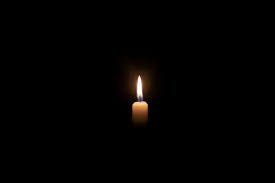
After explaining that God created through the Word and that this Word became human in Jesus, John writes: “In him was life, and the life was the light of all people. The light shines in the darkness, and the darkness did not overcome it.”
Notice that darkness doesn’t instantly disappear. It remains for now. But the good news is that it doesn’t win. The light enters into the darkness.
God doesn’t wait for a quiet, holy world to arrive. God enters a world filled with noise, confusion, fear, and hateful words, and boldly proclaims life and love.
Christmas doesn’t magically make all the meanness and conflict disappear, but it promises a Word strong enough to sustain life in the middle of the meanness and to help us resist.
Words We Speak to Ourselves
This includes the words we speak to ourselves. The words we repeat internally about our worth, our failures, our fears shape our lives just as much as the words we speak out loud.
Are we rehearsing shame or truth? Are we speaking despair or hope? Are we treating ourselves with compassion or with cruelty?
This isn’t about positive thinking or pretending everything is okay when it’s not. It’s about learning to speak to ourselves with truthful compassion rather than relentless judgment.
Creating a Different World
Christmas Eve invites us to pause and ask: What kind of world are we helping to create with our speech? What kind of people are we becoming by the way we talk? What kind of future are our words pointing toward?
The Word has come. The light has entered the darkness. Truth has become a human being. Love has spoken itself into the world.
We’re invited to respond not just with belief, but with lives shaped by God’s Word—with words that tell the truth, that protect human dignity, that refuse to incite fear, that build peace, sustain hope, cultivate joy, and express love.
The Word through whom all things were created is still at work among us. When we choose our words carefully, faithfully, and courageously, we share in that work and reflect the goodness of God.
The Word became flesh and lived among us. And now, by God’s grace, that Word longs to live in and through our lives.
So let our words serve that purpose.
 Pastor Mark Reynolds